I have made my
living using telescopes for the last 25 years, albeit not the astronomical type.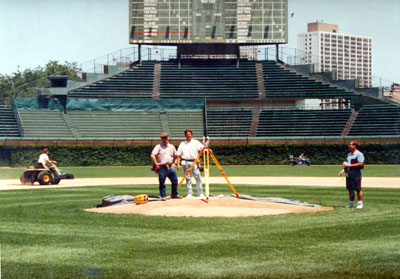 I am a land surveyor in the suburbs of Chicago and over the years I have
occasionally brought home an instrument to observe the planets or the moon.
My first astronomical thrill came when I discovered the bright star overhead was
actually Jupiter and its moons.
I am a land surveyor in the suburbs of Chicago and over the years I have
occasionally brought home an instrument to observe the planets or the moon.
My first astronomical thrill came when I discovered the bright star overhead was
actually Jupiter and its moons.
Surveying instruments don't lend
themselves well to astronomical viewing however, their apertures are relatively
small, meant for daytime viewing, and without a diagonal it is difficult to
view more than 30 degrees above the horizon. In November of 2001 I
purchased a Meade LX 90, an 8" SCT, as my first astronomical telescope. It was a wonderful instrument. With a
little practice it opened the universe and brought it to my backyard.
Photography has always been a hobby of mine and I began experimenting with the
LX 90 and a Pentax ME Super body which I had held onto since the early 80's.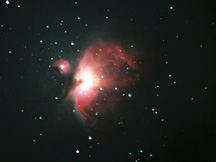 This image of M 42 is my first attempt at manual guiding a film exposure of 22
minutes in single digit temperatures. In February of 2002 I
purchased a Vesta Pro webcam and began doing planetary and lunar imaging and in
May of 2002, I acquired a Starlight Express MX 716 to do deep sky imaging.
The MX 716 is low noise and rock solid and has not given me any problems.
This image of M 42 is my first attempt at manual guiding a film exposure of 22
minutes in single digit temperatures. In February of 2002 I
purchased a Vesta Pro webcam and began doing planetary and lunar imaging and in
May of 2002, I acquired a Starlight Express MX 716 to do deep sky imaging.
The MX 716 is low noise and rock solid and has not given me any problems.
Although the LX 90 was a great all around scope, my heavy interest in imaging
left me desiring a steadier imaging platform. I had only occasionally been
able to guide the LX90 using Star 2000 and my unguided images were limited to
30-40 seconds at f5. In December of 2002, I placed an order for a Mountain
Instruments MI-250, German equatorial mount. I also purchased a Takahashi
Sky 90, a 90mm f5.6 refractor, with a 504 mm focal length for wide field imaging
and an APM 160 mm, f5.5 Maksutov Newtonian with a focal length of 880 mm for
medium field imaging.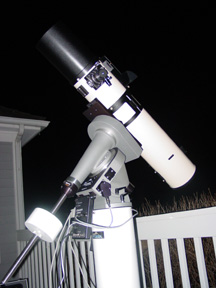
The MI-250
arrived in February of 2003 and has been a great mount, with a periodic error of
around 4-6 arc seconds and the Gemini system is extremely accurate and I really
enjoy using it. Everything I heard about Larry Myers of Mountain
Instruments is true, his service is really top notch. Most of the time I
have been imaging unguided with my new set up, but once I get more familiar with
the dynamics of the mount and scopes I will try using Star 2000 for longer
exposures. I hope to add a H-A filter in the near future and maybe a
longer focal length instrument at some point in time.
April 2003
It has been over 2 years since I have updated this page so I
guess you can say it is somewhat overdue. On the plus side however I can
say that much of what I was using in April 2003 I am still using today.
The biggest change is that I have built an observatory. See
Columbia Observatory for
construction photos and details. Having an observatory is very liberating,
almost all my time can now be spent observing and imaging. No more middle
of the night break down and packing sessions, if you can afford it and have a
place for it I would highly recommend it especially for anyone who does imaging.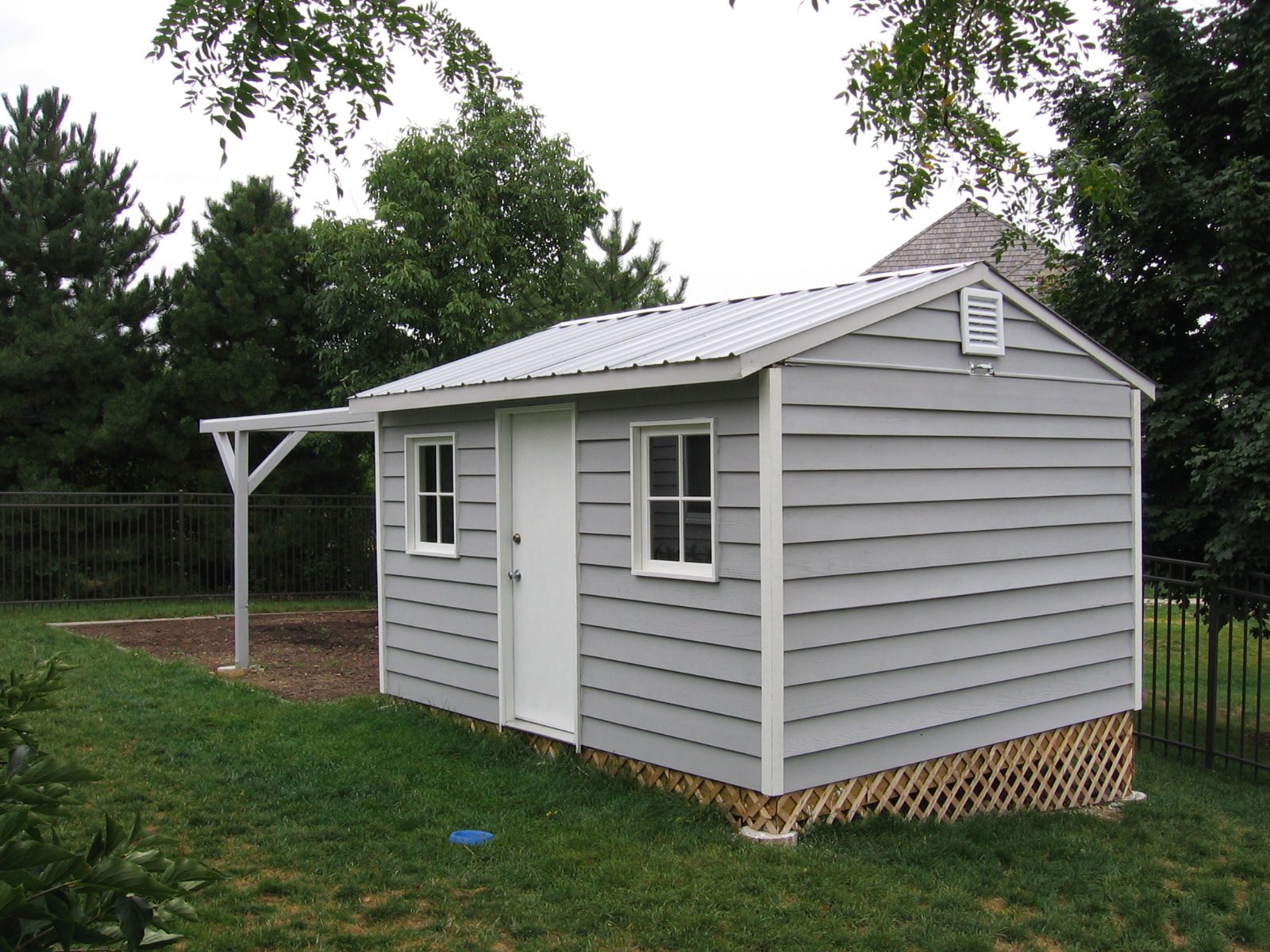
I am still using my MI-250 and am still very pleased with it.
I have had to send it back to Larry Myers at Mountain Instruments for cleaning
and adjustment and his service is still second to none. In my book the
MI-250 is one of the best values in astronomy equipment today.
I purchased an SXV-H9 CCD camera because of its larger format
to go along with my MX 716 which now serves duty as an autoguider. Both
cameras have been very reliable over the years however I have been disappointed
by the lack of software support from Starlight Xpress. It took a couple of years
from my first purchase for software to become available for using both cameras
together in USB mode and that software came from an outside provider,
Diffraction Limited, makers of Maxim DL. I currently use Maxim DL as my
main acquisition and processing software and I strongly recommend it for anyone
using a Starlight Xpress camera.
I purchased an STF 7" Mak Cass in December of 2003 and since
building the observatory this has become my main imaging telescope. The
permanent setup has helped with the temperature differential problems that
plague this type of scope and it has also allowed me to refine my alignment and
guiding to accommodate the longer focal length and slower focal ratio.
I look at it as my big magnifying glass that I can point to the sky and pick up
the smaller details which has always been my interest in CCD imaging.
Someday I may move up in aperture but I think I will stay with the Mak Cass
design.
September 2005
Current
Equipment List
Takahashi Sky 90
APM 160mm Maksutov
Newtonian
STF 7" Mak Cass
Mountain Instruments
MI-250
Starlight Express MX
716
Starlight Xpress
SXV-H9
AP 0.67 Focal Reducer
Vesta Pro webcam
True Technology
Custom Filter Wheel
Astronomik Type II
RGB filters
Astronomik 15nm Ha-SII-OIII
filters
Telrad reflex sight
Rigel Quickfinder
Back